


Can You Get a Mammogram with Breast Implants? A Guide
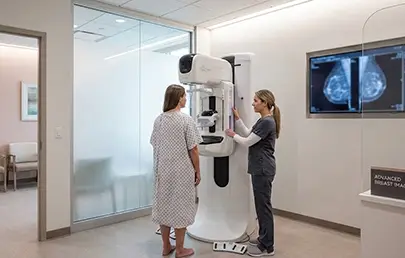
Can You Get a Mammogram with Breast Implants? A Guide
If you’re considering breast augmentation—or you already have implants—you may wonder:
Will implants interfere with mammograms or breast cancer detection?
When it comes to breast implants, your health and safety are the top priority. That's why we need to clear up one of the biggest worries right away. If you’re asking, can you get a mammogram with breast implants?, you might be concerned they could hide potential issues or even get damaged. The truth is, mammography is safe for implants and remains the gold standard for screening. It just requires a specialized technique. We’ll explain how experienced technologists use implant displacement views to get a clear picture, ensuring your health is monitored effectively.
The short answer is reassuring: breast implants do not prevent effective breast cancer screening. However, they do require specialized imaging techniques and experienced radiology teams.
At Beautologie, patient safety and long-term health are always the priority. Understanding how implants interact with breast imaging helps you make confident, informed decisions about your body and your care.
Key Takeaways
- Breast implants do not increase breast cancer risk.
- Mammograms are still effective but require special implant-view techniques.
- Always tell your imaging center you have implants before your appointment.
- Experienced radiologists can see more breast tissue using implant displacement views.
- Regular screening remains essential for early detection and peace of mind.
Do Breast Implants Affect Your Cancer Risk?
One of the most common concerns is whether implants themselves raise cancer risk.
Current medical consensus shows:
- Breast implants do NOT increase the risk of breast cancer
- Patients should follow the same age-based screening guidelines as those without implants
- Routine mammograms remain the gold standard for early detection
There is a rare condition called Breast Implant–Associated Anaplastic Large Cell Lymphoma (BIA-ALCL), primarily linked to certain textured implants. This condition is uncommon and typically presents with swelling or fluid around the implant, not a lump within breast tissue. Today, implant selection and surgical techniques prioritize safety based on the latest guidelines. Beautologie does not use textured implants.
For most patients, the takeaway is simple: implants and cancer screening safely coexist.
Getting a Mammogram with Implants: What to Expect
Breast implants sit either:
- Under the breast tissue (subglandular)
- Under the chest muscle (submuscular)
Because implants are filled with silicone or saline, they appear opaque on X-rays. This means:
- A small portion of breast tissue may be hidden on standard mammogram views
- Additional imaging techniques are used to visualize more tissue
This doesn’t make screening ineffective—it simply requires a more specialized approach.
Think of it like taking a photo around a large object: the photographer adjusts the angle to capture everything clearly.
Expect a Longer Appointment
When you schedule your mammogram, plan for the appointment to take a bit longer than a standard screening. This is because the imaging process is more detailed. A typical mammogram involves taking two X-ray images of each breast. For patients with implants, technicians need to capture extra pictures to see all the tissue clearly. This process, known as implant displacement (ID) views, usually requires four additional images. The technician will gently push the implant back against the chest wall and pull the breast tissue forward for imaging. This extra time and care ensures your radiologist gets the most comprehensive view possible, leaving no stone unturned for your peace of mind.
Preparing for Potential Discomfort
It’s normal to worry about whether a mammogram will be painful with implants. While most people describe the sensation as uncomfortable rather than painful, the compression can feel more intense. The additional views required may also cause some temporary discomfort, especially if you have scar tissue from your breast augmentation surgery. However, it’s important to remember that mammogram technicians are highly trained professionals. They understand how to gently maneuver the breast and implant to get the best images with minimal pressure. Don’t hesitate to communicate with your technician during the procedure if you feel significant pain. A little discomfort is a small price for a crucial health screening.
What Are Implant Displacement Views (And Why They're Key)?
During your mammogram, the technologist will perform implant displacement views (also called Eklund views).
Here’s what happens:
- The implant is gently pushed back toward the chest wall
- The natural breast tissue is pulled forward
- Images are taken to capture as much tissue as possible
Patients with implants typically receive:
- Four standard mammogram images
- Four additional implant displacement images
These extra views allow radiologists to evaluate significantly more breast tissue than standard imaging alone.
While the process may feel slightly more involved, most patients tolerate it well.
Does Your Implant Placement Affect a Mammogram?
Yes—implant position can affect imaging clarity.
Submuscular (under the muscle) implants:
- Allow better visualization of breast tissue
- Often preferred for long-term screening visibility
Subglandular (above the muscle) implants:
- May obscure slightly more tissue
- Still compatible with effective screening using specialized techniques
During your consultation, your surgeon considers your anatomy, lifestyle, aesthetic goals, and long-term health—including imaging considerations.
Why You Must Tell the Technologist About Your Implants
Absolutely.
Before your appointment:
- Inform the scheduling staff you have breast implants
- Choose a facility experienced with implant mammography
- Bring your implant information if available (type and placement)
Experienced technologists make a significant difference in both comfort and imaging accuracy.
Will a Mammogram Damage My Breast Implants?
Another common concern is whether compression could rupture an implant.
The risk is extremely low.
Modern implants are designed to withstand significant pressure. Mammography compression is carefully controlled and performed by trained professionals.
To minimize risk:
- Always use a facility familiar with implant imaging
- Notify the technologist before imaging begins
- Follow routine screening intervals rather than delaying exams
Avoiding mammograms poses a far greater health risk than the minimal compression involved.
How Different Implant Ruptures Are Detected
While implant ruptures are uncommon, it’s helpful to know how they are identified. The detection method depends entirely on the type of implant you have.
For saline implants:
- A rupture is usually obvious.
- The implant deflates as the sterile salt water is safely absorbed by the body.
- This results in a noticeable decrease in breast size and a change in shape.
For silicone implants:
- A rupture can be “silent.”
- Because the cohesive gel often stays within the implant or the surrounding scar tissue capsule, you may not notice any changes in breast size, shape, or feel.
- For this reason, the FDA recommends periodic imaging (ultrasound or MRI) to screen for silent ruptures in patients with silicone implants.
Understanding the differences between implant types is a key part of your breast augmentation journey. Regular follow-ups with your surgeon and adherence to screening guidelines are the best ways to ensure both your peace of mind and long-term health.
Beyond the Mammogram: When Is Additional Imaging Needed?
Sometimes, your doctor may recommend additional imaging such as:
- Breast ultrasound
- Breast MRI
- Diagnostic mammogram
This does not necessarily mean something is wrong. Additional imaging is often used for:
- Dense breast tissue
- Implant evaluation
- Clarifying an unclear area
- Routine high-risk screening
For silicone implants, the FDA recommends periodic MRI or ultrasound to evaluate implant integrity, typically starting 5–6 years after surgery.
3D Mammograms (Tomosynthesis)
You may have also heard of 3D mammograms, or tomosynthesis. This advanced technique takes multiple low-dose images of the breast from different angles, which a computer then assembles into a three-dimensional picture. This can be especially helpful for women with dense breast tissue, as it allows the radiologist to see through overlapping layers of tissue more clearly. For patients with implants, 3D mammograms can offer a more detailed view alongside the standard implant displacement techniques. It’s worth noting that this method involves a slightly higher radiation dose due to the extra images. Your doctor can help you weigh the benefits of a clearer image against this small increase and decide if a 3D mammogram is the right choice for your screening.
The Role of Ultrasound and MRI
If a mammogram shows a dense area or an unclear spot, your doctor might recommend a follow-up with a breast ultrasound or MRI. This is a common next step and doesn’t automatically mean there’s a problem. An ultrasound uses sound waves to create images and is excellent for getting a closer look at specific areas of concern or distinguishing between a solid mass and a fluid-filled cyst. An MRI is often used for women at high risk for breast cancer or to further evaluate abnormalities. For patients with silicone implants, the FDA also recommends periodic MRI or ultrasound screenings to check on the integrity of the implants themselves, a process that is separate from cancer screening.
A Note on Radiation Safety
It’s natural to be concerned about radiation exposure, especially when extra images are needed for implants. However, it’s important to put this into perspective. The amount of radiation used in modern mammography is very low, and the equipment is carefully regulated to ensure safety. Even with the additional implant displacement views, the total dose remains well within safe medical limits. As experts at Scripps Health note, the health risk of skipping a mammogram and potentially missing an early-stage cancer is far greater than the minimal risk from radiation exposure. Regular screening is one of the most powerful tools you have for long-term breast health.
How Often Should You Get Screened with Implants?
Most patients follow standard screening recommendations:
- Age 40+: Annual mammogram
- Earlier screening if:
- Strong family history
- Genetic risk factors (BRCA)
- Physician recommendation
- Strong family history
Implants do not change when you should begin screening—but they do make choosing an experienced imaging center especially important.
An Exception: Screening After Double Mastectomy
For women who have undergone a double mastectomy for breast cancer treatment, followed by reconstruction with implants, the approach to screening changes significantly. Since the vast majority of breast tissue has been removed, routine annual mammograms on the reconstructed breasts are no longer the standard. Instead, follow-up care focuses on monitoring the chest wall, skin, and lymph nodes for any signs of recurrence. This typically involves regular physical examinations by your doctor. In some cases, imaging such as an ultrasound of the chest wall or armpit area may be recommended. Your follow-up care plan is highly personalized and guided by your oncology and surgical team to ensure long-term health and peace of mind.
What to Know About Mammograms and Implants
While screening remains highly effective, implants do introduce a few considerations:
Possible limitations
- Small areas of tissue may be partially obscured
- Additional imaging may be needed more often
Rare risks
- Implant rupture (very uncommon during mammography)
- Capsular contracture affecting positioning
- BIA-ALCL (rare, primarily with textured implants)
The reassuring reality:
With modern imaging techniques and experienced radiologists, early detection rates remain high for patients with implants.
Results vary for each individual, and screening recommendations should always be personalized through consultation with your healthcare providers.
Choosing Implants with Your Long-Term Health in Mind
At Beautologie, surgical planning goes beyond aesthetics.
Your surgeon will discuss:
- Implant type (saline vs. silicone)
- Placement options
- Your future imaging needs
- Lifestyle and long-term health considerations
Our goal is natural-looking results that support lifelong wellness and peace of mind.
How to Care for Your Breast Health After Augmentation
To stay proactive:
- Perform monthly self-exams
- Schedule routine mammograms
- Report any changes such as:
- New swelling
- Lumps
- Pain
- Shape changes
- New swelling
Most patients live confidently for decades with implants and normal screening routines.
Why Choosing an Experienced Surgeon Matters
Patients in Bakersfield, Stockton, and surrounding California communities trust Beautologie for breast procedures designed with both beauty and safety in mind. Our board-certified surgeons collaborate with experienced imaging providers throughout Kern County and the Central Valley to ensure seamless long-term breast health monitoring.
FAQ: Breast Implants and Mammograms
1. Can you get a mammogram with breast implants?
Yes. Special implant displacement views allow radiologists to evaluate breast tissue effectively.
2. Do implants hide breast cancer on mammograms?
Implants may obscure a small amount of tissue, but additional views and imaging techniques improve detection.
3. Are mammograms painful with implants?
Most patients report mild pressure similar to standard mammograms.
4. How often should I get screened after breast augmentation?
Follow standard guidelines—typically annual mammograms starting at age 40, unless otherwise advised.
5. Can a mammogram rupture a silicone implant?
Rupture during mammography is extremely rare when performed by experienced technicians.
6. Do I need an MRI instead of a mammogram if I have implants?
No. Mammograms remain the primary screening tool. MRI may be used for implant integrity or high-risk patients.
7. Should I wait after surgery before getting a mammogram?
Yes. Your surgeon will recommend timing, typically after healing is complete.
8. Does implant placement affect mammogram accuracy?
Submuscular placement often allows better tissue visualization.
9. Are silicone implants harder to image than saline?
Both require specialized views, but screening effectiveness is similar.
10. What is BIA-ALCL and should I worry?
It’s a rare lymphoma associated with certain textured implants. Your surgeon will discuss implant safety options.
Talk with a Beautologie Expert: Book Your Free Consultation
Your confidence should never come at the expense of your health—and at Beautologie, it never does.
If you’re considering breast augmentation or have questions about implants and long-term breast health, schedule a complimentary consultation with our award-winning, board-certified surgeons. With thousands of successful procedures, advanced safety protocols, and a reputation as one of California’s most trusted aesthetic practices, we’re here to support your goals every step of the way.
Schedule your complimentary consultation today and experience the Beautologie difference—where beauty, safety, and confidence come together.
This content is for educational purposes only and does not replace medical advice. Individual results vary. A personalized consultation is required to determine the best treatment plan for you.
Related Articles
- Do Breast Implants Affect Mammograms? | Beautologie
- How Long Do Breast Implants Last Before Replacement? | Beautologie
- Breastfeeding After Breast Implants: What You Need to Know | Beautologie
- When Does Insurance Cover Breast Implants? | Beautologie
- After Surgery Instructions: Breast Augmentation | Beautologie
Marketing Director, Beautologie


All information, images, articles and text on this website are copyrighted by Beautologie Medical Group Inc. and cannot be downloaded, copied, redistributed or used in any way without written permission.
*Individual results may vary.
Beautologie strives to ensure that its services are accessible to people with disabilities. Beautologie.com has invested a significant amount of resources to help ensure that its website is made easier to use and more accessible for people with disabilities, to provide educational resources to all. If you are experiencing difficulty with any content on Beautologie.com or require assistance with any part of our site, please contact us during normal business hours as detailed above and we will be happy to assist. If you wish to report an accessibility issue, have any questions or need assistance, please contact beautologie.com Customer Support at info@beautologie.com