


What Is Capsular Contracture After Breast Augmentation?
What Is Capsular Contracture After Breast Augmentation?
Breast augmentation is one of the most popular cosmetic procedures in the United States, helping thousands of patients feel more confident in their bodies every year. While most patients heal beautifully and enjoy long-lasting results, one potential complication sometimes discussed during consultations or pre-operative appointments is capsular contracture.
If you’ve had breast implants or are considering surgery, understanding this condition can help you feel more informed and confident about your decision.
At Beautologie Cosmetic Surgery & Medical Aesthetics, patient education is a key part of our approach. Our goal is to help you understand what capsular contracture is, how to recognize the signs, and what modern treatment options look like today.
What Is Capsular Contracture?
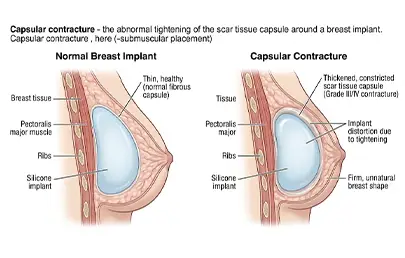
Whenever a medical device is placed in the body—including a breast implant—your body naturally forms a thin layer of scar tissue around it. This is called a capsule, and it’s completely normal.
Think of it like your body creating a soft protective lining around the implant.
Most of the time, this capsule remains thin, flexible, and unnoticeable.
However, in some cases, the capsule can tighten or thicken, squeezing the implant. When this happens, it’s called capsular contracture.
This tightening can change how the breast feels, looks, or moves.
While capsular contracture can sound alarming, it’s important to remember that:
- It’s relatively uncommon
- Many cases are mild
- Modern surgical techniques significantly reduce the risk
And when it does occur, effective treatments are available.
Why Does Capsular Contracture Happen?
Doctors don’t always know exactly why capsular contracture develops, but research suggests several factors may contribute.
Common possible causes include:
Inflammation around the implant
Even mild inflammation during healing can influence scar tissue formation.
Bacterial contamination (biofilm)
Tiny amounts of bacteria—often harmless—may trigger the body to form thicker scar tissue.
Hematoma or bleeding after surgery
Blood around the implant can stimulate additional scar formation.
Seroma (fluid buildup)
Fluid around the implant may increase inflammation.
Implant rupture or leakage
Radiation therapy
Genetic healing tendencies
At Beautologie, surgeons use advanced sterile techniques and careful surgical planning to minimize these risks as much as possible.
Signs and Symptoms of Capsular Contracture
Capsular contracture can develop months or even years after breast augmentation, though it most often appears within the first two years.
The symptoms usually progress gradually.
Common Signs to Watch For
Breast firmness or tightness
One breast may start to feel noticeably firmer than the other.
Breast shape distortion
The breast may appear higher, rounder, or slightly misshapen.
Implant shifting or sitting higher on the chest
Visible asymmetry between breasts
Discomfort or pain
Reduced softness or natural movement
In mild cases, patients may simply notice the breast feels slightly firmer. In more advanced cases, the breast may look tight or distorted.
The Baker Classification System
Plastic surgeons typically categorize capsular contracture using the Baker grading system, which ranges from Grade I to Grade IV.
Grade I
Breasts look and feel normal and soft.
Grade II
Breasts feel slightly firm, but appearance is still normal.
Grade III
Breasts feel firm and look distorted or unnatural.
Grade IV
Breasts feel very hard and painful, with visible distortion.
Grades III and IV are the stages most likely to require medical treatment or surgery.
Key Takeaways
- Capsular contracture occurs when scar tissue tightens around a breast implant.
- Early signs include firmness, asymmetry, or breast shape changes.
- Plastic surgeons classify it using the Baker grading system (I–IV).
- Mild cases may require monitoring or conservative treatment.
- Advanced cases are typically treated with capsulectomy or implant revision surgery.
How Common Is Capsular Contracture?
With modern surgical techniques and implant technology, capsular contracture is less common than many patients expect.
Studies estimate that the risk ranges from 5%–10% over the lifetime of implants, depending on factors like:
- Implant placement
- Implant type
- Surgical technique
- Individual healing response
At experienced practices like Beautologie, careful surgical planning and evidence-based protocols help minimize risk.
How Is Capsular Contracture Treated?
Treatment depends on severity, symptoms, and patient goals.
Some patients only need monitoring, while others may benefit from surgical correction.
Non-Surgical Treatments
In very early or mild cases, surgeons may recommend conservative treatments.
These may include:
Massage techniques
Certain patients may benefit from gentle implant massage, depending on implant placement.
Anti-inflammatory medications
Leukotriene inhibitors (in select cases)
Ultrasound therapy
While these approaches can sometimes help in early cases, they are not always effective for advanced contracture.
Surgical Treatment: Capsulectomy
For moderate to severe capsular contracture, the most reliable treatment is a procedure called capsulectomy.
This surgery involves removing the scar tissue capsule surrounding the implant.
There are two main approaches.
Total capsulectomy
The surgeon removes the entire capsule.
Partial capsulectomy
Only the tightened sections are removed.
After removing the scar tissue, the surgeon may:
- Replace the implant
- Adjust implant position
- Switch implant types
- Place a new implant pocket
This procedure is often referred to as breast implant revision surgery.
Can Capsular Contracture Be Prevented?
While no procedure can eliminate risk entirely, several strategies significantly reduce the likelihood of capsular contracture.
Modern prevention techniques include:
Advanced sterile surgical protocols
Minimal implant handling techniques
Antibiotic irrigation during surgery
Submuscular implant placement
High-quality implant devices
Careful post-operative care
At Beautologie, our surgeons follow strict surgical protocols designed to optimize healing and minimize complications.
What Recovery Looks Like After Treatment
Recovery after capsular contracture revision surgery is typically similar to recovery from breast augmentation.
Patients can generally expect:
1–2 weeks of initial recovery
Temporary swelling and tightness
Gradual improvement over several weeks
Final results appearing within a few months
Most patients are able to return to work within about a week, depending on the type of procedure performed.
Your surgeon will provide detailed recovery instructions tailored to your specific case.
Are Breast Implants Still Safe?
Yes. Breast implants remain one of the most studied medical devices in modern medicine.
Millions of patients safely undergo breast augmentation and breast reconstruction procedures every year.
While complications like capsular contracture are possible, working with experienced, board-certified surgeons significantly reduces risk and ensures that any issues are handled quickly and safely.
Potential Complications to Be Aware Of
Like any surgical procedure, breast implant surgery carries potential risks.
These may include:
- Capsular contracture
- Implant rupture
- Infection
- Seroma or fluid buildup
- Changes in nipple sensation
- Implant malposition
Fortunately, these complications are relatively uncommon, and most can be successfully treated if they occur.
At Beautologie, patient safety is always the highest priority. During your consultation, your surgeon will review your individual anatomy, medical history, and goals to ensure you are an appropriate candidate.
Results vary from patient to patient, and a personal consultation is required to determine the best treatment plan.
Local Expertise You Can Trust
Patients seeking breast augmentation or breast implant revision in Bakersfield, Stockton, and surrounding California communities trust Beautologie for personalized care and advanced surgical expertise.
Our award-winning team of board-certified plastic surgeons has performed thousands of procedures and is known for delivering natural-looking, confidence-boosting results in a welcoming, patient-focused environment.
Whether you're considering your first augmentation or exploring options for breast implant revision, our team is here to guide you every step of the way.
FAQ: Capsular Contracture
What does capsular contracture feel like?
Most patients describe capsular contracture as increasing firmness or tightness in the breast. In advanced cases, it may cause discomfort or visible distortion.
How soon can capsular contracture occur?
It can occur months or even years after breast augmentation, though it most commonly develops within the first two years.
Does capsular contracture always require surgery?
No. Mild cases (Baker Grade I or II) may only require monitoring or conservative treatments.
Can capsular contracture go away on its own?
In most cases, once significant scar tightening occurs, surgical treatment is the most effective solution.
Will insurance cover capsular contracture treatment?
Insurance may cover treatment if implants were placed for reconstruction, but cosmetic augmentation revisions are typically self-pay. Financing or implant warranties are common ways to help make payments manageable.
Can capsular contracture come back after surgery?
Recurrence is possible but relatively uncommon, especially when advanced surgical techniques are used.
Are textured implants better for preventing capsular contracture?
Some studies suggest textured implants may reduce risk in certain placements, but implant choice should be discussed with your surgeon. Textured implants come with additional concerns of their own.
Is capsular contracture dangerous?
Capsular contracture is not life-threatening, but it can affect comfort and appearance, which is why treatment may be recommended.
How do surgeons diagnose capsular contracture?
Diagnosis usually involves physical examination, medical history, and sometimes imaging such as ultrasound or MRI.
Can massage prevent capsular contracture?
Massage may help in certain situations, but it does not guarantee prevention and should only be done if recommended by your surgeon.
Book Your Consultation Today
If you’re experiencing changes in your breast implants—or simply want expert guidance before surgery—the team at Beautologie is here to help.
Schedule a complimentary consultation with our award-winning surgeons to discuss your goals, evaluate your implants, and explore personalized treatment options.
With board-certified surgeons, thousands of successful procedures, and a reputation for exceptional patient care, Beautologie is proud to help patients feel confident in their results.
Your journey toward comfort, confidence, and beautiful results starts with a conversation.
Marketing Director, Beautologie


All information, images, articles and text on this website are copyrighted by Beautologie Medical Group Inc. and cannot be downloaded, copied, redistributed or used in any way without written permission.
*Individual results may vary.
Beautologie strives to ensure that its services are accessible to people with disabilities. Beautologie.com has invested a significant amount of resources to help ensure that its website is made easier to use and more accessible for people with disabilities, to provide educational resources to all. If you are experiencing difficulty with any content on Beautologie.com or require assistance with any part of our site, please contact us during normal business hours as detailed above and we will be happy to assist. If you wish to report an accessibility issue, have any questions or need assistance, please contact beautologie.com Customer Support at info@beautologie.com