


Will My Implants Look Bigger Once They Drop? Yes!
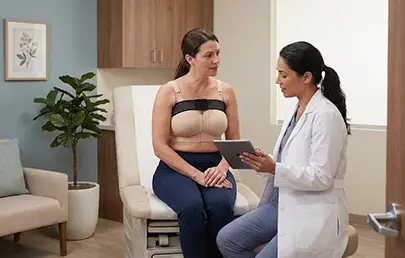
Will My Implants Look Bigger Once They Drop? Yes!
If you’ve just scheduled—or are considering—breast augmentation, one of the most common questions we hear at Beautologie is:
“Will my implants look high and tight at first?”
The short answer: Yes, that’s completely normal.
In fact, implants typically sit higher on the chest immediately after surgery. Over time, they gradually soften, settle, and assume a more natural contour. This transition is often called the “drop and fluff” process.”
Let’s walk through what that means, how long it takes, and what you can expect—so you feel informed, calm, and confident every step of the way.
Why Do Breast Implants Sit High After Surgery?
Right after surgery, your body is in healing mode.
There are three main reasons implants initially appear higher:
1. Post-Surgical Swelling
Swelling is your body’s normal response to surgery. After breast augmentation, tissue fluid and inflammation temporarily make the breasts appear fuller and tighter.
Think of it like wearing a brand-new pair of leather shoes—they start stiff before softening and conforming to you.
2. Tight Chest Muscles (Especially Submuscular Placement)
If your implants are placed partially or fully under the pectoral muscle (common in many patients), that muscle acts like a supportive band.
Initially, it’s tight and protective. Over several weeks, it relaxes and allows the implant to settle into a more natural position.
3. Surgical Pocket Healing
During surgery, your surgeon creates a precise pocket for the implant. Early on, the tissues are firm as they begin to heal and form a capsule (a normal scar layer around the implant).
As healing progresses, this capsule softens and stabilizes the implant’s position.
What Is “Drop and Fluff”?
“Drop and fluff” is a patient-friendly term for the natural settling process after breast implant surgery.
“Drop”
The implant descends slightly into a lower, more anatomically natural position on the chest wall.
“Fluff”
The lower portion of the breast softens and rounds out, creating a natural teardrop contour instead of a high, compressed look.
Not every patient notices a dramatic change—but nearly all experience some degree of softening and settling.
How Long Does It Take for Implants to Drop?
Every body heals differently, but here’s a general timeline:
Weeks 1–2:
Breasts appear high, firm, and possibly slightly square. Swelling is most noticeable.
Weeks 3–6:
Swelling begins to decrease. Implants start to descend. Breasts feel softer.
2–3 Months:
Most visible “drop and fluff” changes occur. Shape looks significantly more natural.
6 Months:
Results look close to final for most patients.
12 Months:
Complete tissue maturation and scar softening.
Important: Results vary based on implant type, placement, body type, skin elasticity, and surgical technique.
Do Some Implants Drop More Than Others?
Yes. Several factors influence how noticeable the settling process is.
Implant Placement
- Under the muscle (submuscular): More noticeable drop over time
- Over the muscle (subglandular): Less dramatic change
Implant Size
Larger implants may appear tighter at first, making the drop more noticeable.
Implant Profile
High-profile implants project more forward, which can initially emphasize upper fullness.
Tissue Characteristics
Patients with tight skin (common in younger or smaller-breasted individuals) may experience more visible settling.
Will They Ever Look “Final” Immediately?
In most cases, no.
Immediately after surgery, your breasts are in a temporary state. Swelling, muscle tension, and tissue firmness prevent the final contour from appearing right away.
Think of it like a new pair of stiff leather shoes; at first, they sit high and feel tight, but with time and "wear" (healing), they soften and mold perfectly to your shape.
Trust the process.
What Should I Expect During the First Few Weeks?
At Beautologie, we prepare our patients thoroughly so there are no surprises.
Here’s what’s common and completely normal:
- Breasts sitting higher than expected
- Tightness in the upper chest
- Temporary asymmetry (one side may settle faster)
- Firmness to the touch
- A slightly “augmented” or rounder-than-expected look
These changes evolve gradually.
Can I Help the Implants Drop Faster?
In some cases, yes—but only under your surgeon’s guidance.
Your surgeon may recommend:
- Specific implant displacement exercises
- Massage techniques (for certain implant types)
- Wearing a supportive surgical bra
- Avoiding underwire bras early on
- Wearing a post-op garment like a breast strap (with guidance from your surgeon)
Never begin massage or exercises unless instructed. The wrong technique can disrupt healing.
When Should I Be Concerned?
While high-riding implants are normal early on, you should contact your surgeon if you notice:
- Severe pain
- Sudden swelling
- One implant remaining significantly higher after several months
- Hardness that doesn’t improve
- Visible distortion
Rare complications such as capsular contracture (tight scar tissue around the implant) can affect final positioning—but these are uncommon and treatable.
Complications & Realistic Expectations
Modern breast augmentation is highly safe when performed by experienced, board-certified plastic surgeons.
However, as with any surgery, risks exist, including:
- Bleeding (hematoma)
- Infection
- Implant malposition
- Capsular contracture
- Delayed drop
At Beautologie, our surgeons follow current surgical best practices and safety guidelines to minimize these risks. We perform thousands of procedures using advanced techniques and meticulous pocket creation to ensure predictable results.
It’s important to understand: results vary, and this information is general education—not a substitute for a personalized consultation.
How Do Experienced Surgeons Plan for “Drop and Fluff”?
This is where expertise matters.
Our surgeons carefully account for:
- Implant dimensions
- Chest wall anatomy
- Skin elasticity
- Desired projection
- Long-term settling
A well-planned augmentation anticipates the drop process—so your long-term results match your aesthetic goals.
The Emotional Side of Healing
It’s completely normal to feel unsure in the first few weeks.
You’ve made an investment in yourself. You want reassurance.
At Beautologie, we tell patients:
Don’t judge your results too early.
Healing is a journey. Swelling resolves. Tissues soften. Confidence grows.
And by the three-month mark, most patients feel thrilled with their shape.
Key Takeaways
- Breast implants typically sit higher immediately after surgery.
- The “drop and fluff” process usually takes 6–12 weeks.
- Final results are rarely visible in the first month.
- Implant type, placement, and body characteristics influence settling.
- Early tightness and upper fullness are normal and temporary.
- Always follow your surgeon’s post-op instructions.
Frequently Asked Questions (FAQ)
1. How long does it take for breast implants to drop?
Most implants begin settling within 3–6 weeks, with noticeable changes by 2–3 months.
2. Why do my implants look too high after surgery?
Swelling and tight chest muscles temporarily hold implants in a higher position.
3. Will one implant drop before the other?
Yes. It’s common for one side to settle slightly faster.
4. Do gummy bear implants drop?
Yes. All implant types settle to some degree, including cohesive gel implants.
5. What if my implants don’t drop after 3 months?
Some patients take longer. Persistent issues should be evaluated by your surgeon.
6. Does implant size affect how much they drop?
Larger implants may appear tighter initially, making the settling process more noticeable.
7. Can massage help implants settle?
Sometimes—but only if your surgeon recommends it.
8. Will my breasts feel soft after they drop?
Yes. As swelling decreases and tissue relaxes, breasts typically feel more natural.
9. When can I wear a regular bra?
Usually after several weeks, depending on healing and surgeon guidance.
10. Could implants stay permanently high?
Rarely. If so, revision surgery may be considered.
Considering Breast Augmentation in Bakersfield or Stockton?
If you’re exploring breast augmentation in Bakersfield, Stockton, Kern County or surrounding Central California communities, choosing an experienced surgical team matters. At Beautologie, our award-winning, board-certified plastic surgeons have helped thousands of women throughout Kern County and the Central Valley achieve natural, beautifully balanced results.
We understand California women want outcomes that look effortless—not overdone.
Schedule Your Complimentary Consultation
If you’re considering breast augmentation—or have questions about your healing timeline—our team is here for you.
Schedule a complimentary consultation with our award-winning surgeons at Beautologie Cosmetic Surgery & Medical Aesthetics. With thousands of successful procedures, advanced surgical techniques, and a compassionate California-modern approach, we’re honored to guide you toward confident, natural-looking results.
Because at Beautologie, confidence isn’t rushed. It’s revealed—beautifully and safely.
This article is for educational purposes only and does not replace individualized medical advice. Results vary. A personal consultation is required to determine candidacy and treatment plan.
Marketing Director, Beautologie


All information, images, articles and text on this website are copyrighted by Beautologie Medical Group Inc. and cannot be downloaded, copied, redistributed or used in any way without written permission.
*Individual results may vary.
Beautologie strives to ensure that its services are accessible to people with disabilities. Beautologie.com has invested a significant amount of resources to help ensure that its website is made easier to use and more accessible for people with disabilities, to provide educational resources to all. If you are experiencing difficulty with any content on Beautologie.com or require assistance with any part of our site, please contact us during normal business hours as detailed above and we will be happy to assist. If you wish to report an accessibility issue, have any questions or need assistance, please contact beautologie.com Customer Support at info@beautologie.com