


Your Brachioplasty Recovery Time: A Week-by-Week Guide
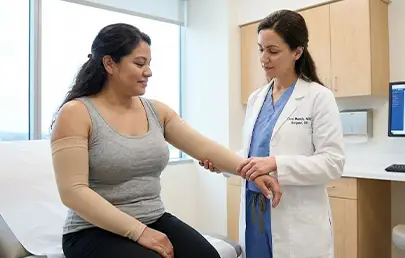
Your Brachioplasty Recovery Time: A Week-by-Week Guide
If you’re considering an arm lift (brachioplasty), chances are you’re just as focused on recovery as you are on results. One of the most common—and most important—questions patients ask is:
“How long will it take to recover, and when can I safely raise my arms again?”
At Beautologie Cosmetic Surgery, Medical Aesthetics & Wellness, we believe the best outcomes start with clear expectations and confident decision-making. Arm lift recovery isn’t just about healing incisions—it’s about restoring movement, protecting your results, and returning to daily life feeling strong and supported.
This guide walks you through the complete arm lift recovery timeline, explains when and how arm movement is reintroduced, and helps you understand what’s normal at each stage—so you can plan ahead with confidence.
Think of recovery like rehabilitating a tailored garment: the structure needs time to set before it moves freely and beautifully again.
Understanding Arm Lift Surgery and Why Recovery Takes Time
An arm lift removes excess skin and, in some cases, stubborn fat from the upper arms to create a smoother, firmer contour. The procedure is commonly chosen after significant weight loss, pregnancy, or natural age-related skin laxity.
Depending on your anatomy and goals, your surgeon may perform:
- A traditional arm lift (incision from armpit to elbow)
- A mini arm lift (shorter incision near the armpit)
- An arm lift combined with liposuction
Because this surgery involves skin excision, internal tightening, and incision healing, recovery must be gradual and intentional—especially when it comes to raising your arms.
Arm Lift Recovery Timeline: What to Expect Week by Week
Days 1–3: Immediate Post-Op Phase
This is the rest-and-protect stage.
What you’ll likely experience:
- Swelling, tightness, and soreness
- Arms wrapped or placed in compression garments
- Limited arm mobility
- Mild bruising
Arm movement:
You should not raise your arms above shoulder level. Gentle movements—such as bending your elbows or using your hands for light tasks—are typically allowed.
Focus:
Pain control, incision care, hydration, and rest.
Week 1: Early Healing Begins
By the end of the first week, many patients feel more comfortable but still swollen.
What’s normal:
- Tight skin sensation
- Swelling that fluctuates throughout the day
- Fatigue
Arm movement:
- Arms stay below shoulder height
- No lifting, pushing, or pulling
- No overhead reaching
Think of this phase as letting internal stitches “set”—like allowing glue to dry before applying pressure.
Weeks 2–3: Gradual Mobility Returns
This is where patients often feel better—but must still be cautious.
What improves:
- Reduced pain
- Less swelling
- Increased comfort with daily tasks
Arm movement:
- Light, controlled arm movement allowed
- Some surgeons allow gentle shoulder-level reaching
- Still no full overhead arm lifting
Compression garments are usually still worn to support healing and reduce swelling.
Weeks 4–6: Functional Recovery Phase
Most patients turn an important corner during this stage.
What’s happening internally:
- Incisions continue to strengthen
- Swelling steadily decreases
- Scar tissue matures
Arm movement:
- Gradual reintroduction of overhead movement
- Light stretching may begin (surgeon-guided)
- No heavy lifting or strenuous upper-body exercise yet
Many patients return to desk work and light activity comfortably during this phase.
Weeks 8–12: Full Range of Motion (For Most Patients)
This is when many patients can finally say, “I feel like myself again.”
Arm movement:
- Full overhead arm raising is usually safe
- Strength training may resume slowly
- Normal daily activities typically unrestricted
That said, results vary. Your exact timeline depends on:
- Incision length
- Whether liposuction was added
- Skin quality
- Healing response
- Adherence to post-op instructions
When Can I Raise My Arms Fully After an Arm Lift?
Short Answer
Most patients can fully raise their arms between 8–12 weeks, with gradual movement introduced earlier under surgeon guidance.
Why Restrictions Matter
Raising your arms too soon can:
- Stretch healing incisions
- Widen scars
- Increase swelling
- Delay healing
Your surgeon’s restrictions aren’t about slowing you down—they’re about protecting your long-term result.
Factors That Affect Arm Lift Recovery Time
Surgical Technique
A mini arm lift often heals faster than a full brachioplasty, but may not address extensive laxity.
Skin Quality & Elasticity
Healthier skin generally recovers more efficiently.
Combination Procedures
If your arm lift is combined with liposuction, tummy tuck, or part of a mommy makeover, recovery timelines may overlap.
Lifestyle Factors
Smoking, poor nutrition, or returning to activity too early can slow healing.
Scars, Swelling, and Sensation Changes During Recovery
Scars
Arm lift scars typically run along the inner arm and fade significantly over time. Scar care protocols may include:
- Silicone therapy
- Sun protection
- Medical-grade skincare
Swelling
Swelling can persist for several months and is often worse at the end of the day early on.
Numbness or Tingling
Temporary changes in sensation are common and usually resolve gradually as nerves heal.
Potential Complications
While arm lift surgery is generally safe when performed by board-certified plastic surgeons, it’s important to understand potential risks, including:
- Delayed wound healing
- Infection
- Fluid buildup (seroma)
- Noticeable scarring
At Beautologie, safety protocols, meticulous surgical technique, and close follow-up care are designed to minimize risks and support smooth recovery.
Key Takeaways
- Arm lift recovery typically spans 6–8 weeks, with continued refinement beyond that
- Overhead arm movement is usually safe around 8–12 weeks
- Early movement is limited to protect incisions and scars
- Swelling and tightness are normal and temporary
- Following post-op instructions directly impacts final results
Frequently Asked Questions (FAQ)
How painful is arm lift recovery?
Most patients describe discomfort as moderate and manageable with prescribed medication and proper rest.
When can I drive after an arm lift?
Typically 7–10 days, once you’re off narcotic pain medication and can move your arms comfortably.
When can I sleep normally?
Many patients sleep elevated for the first 1–2 weeks, then gradually return to preferred positions.
Can I work during recovery?
Desk work is often possible after 1–2 weeks, depending on comfort and arm use.
Will lifting my arms too early ruin my results?
It can widen scars or increase swelling, which is why gradual movement is essential.
How long do I wear compression garments?
Usually 4–6 weeks, depending on surgeon preference and swelling.
When can I exercise again?
Lower-body exercise may resume earlier; upper-body workouts typically wait 8–12 weeks.
Do arm lift scars go away?
They fade significantly but don’t disappear entirely. Proper scar care makes a major difference.
Is arm lift recovery harder than tummy tuck recovery?
Recovery experiences differ, but arm lift downtime is often shorter and less physically limiting.
Will my arms feel tight forever?
No—tightness gradually softens as swelling resolves and tissues relax.
Serving Bakersfield, Stockton & Surrounding Areas
Beautologie Cosmetic Surgery proudly serves patients throughout Bakersfield, Stockton, and surrounding California communities, offering personalized surgical care close to home. Our local patients appreciate convenient follow-up visits, continuity of care, and a team that understands the unique needs of Central Valley lifestyles.
Free Consultations are Available
Schedule a complimentary consultation with our award-winning surgeons at Beautologie Cosmetic Surgery, Medical Aesthetics & Wellness.
Our board-certified plastic surgeons, thousands of successful procedures, and reputation for compassionate, results-driven care make Beautologie a trusted destination for arm lift surgery in California.
Recovery timelines vary, and every body heals differently. A personalized consultation is the best way to receive accurate guidance, customized planning, and confident next steps.
✨ Your transformation deserves expert hands—and a recovery plan designed around you.
Marketing Director, Beautologie


All information, images, articles and text on this website are copyrighted by Beautologie Medical Group Inc. and cannot be downloaded, copied, redistributed or used in any way without written permission.
*Individual results may vary.
Beautologie strives to ensure that its services are accessible to people with disabilities. Beautologie.com has invested a significant amount of resources to help ensure that its website is made easier to use and more accessible for people with disabilities, to provide educational resources to all. If you are experiencing difficulty with any content on Beautologie.com or require assistance with any part of our site, please contact us during normal business hours as detailed above and we will be happy to assist. If you wish to report an accessibility issue, have any questions or need assistance, please contact beautologie.com Customer Support at info@beautologie.com